
Key takeaways
- Most adults need about 2.7–3.7 litres of total fluid a day, and roughly 2–3 litres of that should come from drinks.
- Heat, exercise and illness all raise your needs, so a Pakistani summer means drinking more.
- Pale straw-coloured urine is the simplest everyday sign that you’re well hydrated.
- Count your goal in bottle refills, not glasses. It’s far easier to track.
“Drink more water” is advice almost everyone has heard and very few people follow. Part of the problem is that the goal feels vague. How much is enough? Does chai count? And what changes when it’s 42°C outside? This guide turns hydration into a number you can actually work with.
The short answer
Health authorities don’t give one magic number, because needs vary from person to person. A widely used guideline from the U.S. National Academies, often cited by the Mayo Clinic, suggests an adequate total fluid intake of about:
- 3.7 litres a day for men
- 2.7 litres a day for women
That figure includes all fluids, including water from food. Roughly 20% usually comes from what you eat, such as fruit, vegetables, daal and yoghurt. That leaves most adults aiming for around 2–3 litres of drinks a day. The familiar “8 glasses a day” (about 2 litres) is a reasonable starting point. Just treat it as a minimum, not a ceiling.
Your daily water target
Total fluid guideline for adults, and how much of it to drink.
≈ 3 L from drinks
≈ 2.2 L from drinks
Source: U.S. National Academies guidelines, as summarised by the Mayo Clinic. Needs rise in heat and with exercise.
Why Pakistan’s climate changes the maths
Those guidelines assume a moderate climate and a typical activity level. Your needs go up when:
- It’s hot. In a Lahore or Karachi summer you can lose a lot of water through sweat without noticing, especially in humidity.
- You exercise. A gym session, cricket match or long walk adds to what you need. Drink before, during and after.
- You commute or work outdoors. Time in traffic, on a bike or on-site adds up quickly.
- You’re unwell. Fever, vomiting or diarrhoea all increase fluid loss.
- You’re pregnant or breastfeeding. Both raise daily fluid needs.
On a hot or active day, it’s normal to need noticeably more than your baseline.
Signs you’re not drinking enough
Thirst is the obvious one, but by the time you feel it you’re often already a little behind. Watch for:
- Dark yellow urine, or going to the toilet less often than usual
- Headaches, especially in the afternoon
- Tiredness or low energy
- Dry mouth and lips
- Feeling dizzy or light-headed when you stand up
Even mild dehydration can affect how you feel and think. In a 2011 study published in the British Journal of Nutrition, young men who lost around 1.5% of their body water showed poorer attention and working memory, along with more tension and fatigue. That’s a level of dehydration many people reach on an ordinary busy day.
The easiest daily check: urine colour
You don’t need an app to know how you’re doing. Pale straw-coloured urine generally means you’re well hydrated. Dark yellow or amber means drink more. (Some vitamins and medicines can change the colour, so use it as a guide rather than a test.)
The urine colour check
A quick, free way to see how hydrated you are.
Some vitamins and medicines can change urine colour. Use this as a guide, not a medical test.
Turn the number into a plan
“Drink 2.5 litres” is hard to track. “Finish my bottle three times” is easy. The simplest way to hit your target is to measure it in bottles:
- With an 800 ml bottle: about three fills gets you to roughly 2.4 litres.
- With a 1 litre bottle: two to three fills covers most days, and three for hot or active ones.
Then split it across your day. For example: finish the first bottle by lunch, the second by the time you leave work or class, and the third by the evening. Spreading it out is easier on your body than drinking a lot at once, and you won’t be up all night.
Your day in bottles
An easy plan with a 1 litre bottle.
- 8:00 AMFill your 1 L bottle before you leave home
- 1:00 PMBottle 1 finished by lunch, so refill 1 L
- 6:00 PMBottle 2 finished by the end of work or class, so refill 2 L
- 10:00 PMSip through the evening and you’ve reached your goal 2.5–3 L
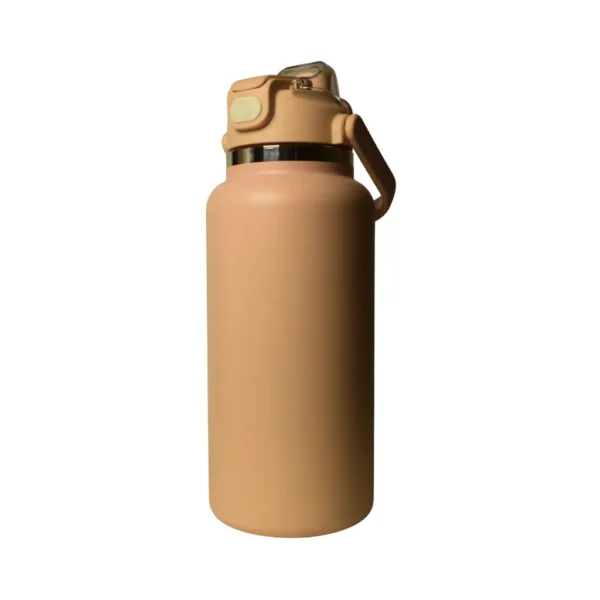
Luxe Mega: 1 litre, refill and done
A full litre in one bottle means just two or three refills a day. It’s easy to carry for work, the gym and travel, and comes in four colours.
Shop Luxe Mega →Do tea and coffee count?
Yes, mostly. Caffeinated drinks have a mild diuretic effect, but for regular drinkers the fluid in a cup of chai still counts towards your total. The catch is sugar: several sweet cups a day add up. Let water do most of the work, and enjoy your chai on top of it.
Can you drink too much water?
It’s possible but rare for healthy adults. It usually happens when someone drinks very large amounts in a short time, for example during endurance events. Drink steadily through the day rather than forcing litres down at once. If you have a kidney, heart or liver condition, or take medicine that affects fluid balance, ask your doctor what’s right for you.
The bottom line
Most adults should aim for roughly 2–3 litres of drinks a day, and more in the heat or when active. Check your urine colour, and measure your intake in bottles rather than glasses. Knowing the number is the easy part. The real challenge is doing it every day, and that’s what our next guide covers: how to build a water-drinking habit that actually sticks.
Make hydration a habit you’ll love
Insulated stainless steel bottles and tumblers that keep water cold for hours, designed to go everywhere you do.
- Cash on delivery
- 3–5 day delivery across Pakistan
- WhatsApp support
This article is general information, not medical advice. If you have a health condition, speak to your doctor about your fluid needs.